From Mamdani in New York to Raman in Los Angeles — and a question closer to home: Is Long Beach a socialist city?
By Greg Johnson | Beach City Perspective
The elections are over. The past few cycles have been boisterously competitive across the nation. And in these recent political times, we keep hearing a term that has moved from the fringes of American political conversation to the forefront: Democratic Socialist.
It seems the term is almost always tossed into the political arena as if it were something bad. Something dangerous. Something decidedly un-American. Zohran Mamdani was elected mayor of New York City in a historic election in 2025. His political critics frequently pointed to his democratic socialism as a reason to fear his leadership. And now, Los Angeles City Councilmember Nithya Raman has mounted a stunning challenge to incumbent Mayor Karen Bass. As the November 2026 election results unfold, Raman has emerged with a lead in a contest that has shaken the political establishment of America’s second-largest city. Raman is a democratic socialist.
Or is she?
What exactly does that mean?
For generations, Americans have been taught that socialism and communism are bad things. Evil, even. The very words conjure images of military columns marching through city streets, armed soldiers exercising violent control over civilian populations, government censorship and citizens living under the watchful eyes of an all-powerful state. These images have been presented to us as the frightening alternative to American democracy.
(Heck, in this democracy aren’t we witnessing some troubling images of militarized authority on our own streets today? But I digress...)
The point is that our present political age demands a more thoughtful examination of the ideas being debated in our democracy. What is democratic socialism? What makes Nithya Raman a socialist? What makes Zohran Mamdani a democratic socialist? Is socialism fundamentally opposed to capitalism? Does it threaten democracy, or can it strengthen democracy by expanding economic opportunity?
And once we understand those questions, perhaps we can begin to understand how to build from within. How to strengthen our institutions and create greater economic independence.
And since I’m in Long Beach and observed how the City moves and exercises government, I am contemplating and asking a question: Is Long Beach already practicing a form of democratic socialism without calling it that?
What Exactly Is Democratic Socialism?
Before we examine the political philosophies of Nithya Raman and Zohran Mamdani, perhaps we should begin with the dictionary. Cambridge Dictionary defines socialism as an economic or political system based on government ownership and control of important businesses and methods of production.
Dictionary.com describes democratic socialism as socialism, or a modified form of socialism, achieved through gradual democratic political processes. But the Stanford Encyclopedia of Philosophy offers a more comprehensive explanation, one that takes us beyond government ownership and into the question of economic power.
According to Stanford, the defining characteristic of socialism is that:
“The bulk of the means of production is under social, democratic control.”
Stanford explains that socialism is not necessarily the same as government control. An economy controlled by the state, without meaningful democratic participation by its people, does not fulfill the democratic ideals associated with socialism. Democratic socialism, then, is not simply about government providing services. It is about extending democratic principles into economic life itself.
Who owns the businesses? Who controls the resources? Who determines how wealth is produced and distributed? And who benefits from the economic activity of a community? These questions go to the heart of socialist thought. Democratic socialists generally believe that ordinary people, including workers and communities, should have greater influence over economic institutions rather than leaving major economic decisions exclusively in the hands of private owners and investors.
This brings us to an important question: Does a city become socialist simply because it provides affordable housing, supports healthcare access, funds nonprofit organizations or advocates for economic equity? Not necessarily. A city can embrace all those policies while remaining firmly rooted in capitalism.
What Makes Nithya Raman a Socialist?
Nithya Raman is not simply a progressive politician who happens to support affordable housing. She is affiliated with the Democratic Socialists of America, commonly known as the DSA, an organization that advocates a more democratically controlled economy. Raman first won election to the Los Angeles City Council in 2020, building support around housing affordability, homelessness and tenant protections.(How’d she do in these areas, because they were saying she has missed a lot of meetings where decisions are being made. What were the tenant protections?
Her political identity is closely associated with the argument that government must become more responsive to the material needs of ordinary residents.Yet Raman presents an interesting contradiction to the conventional definition of democratic socialism.
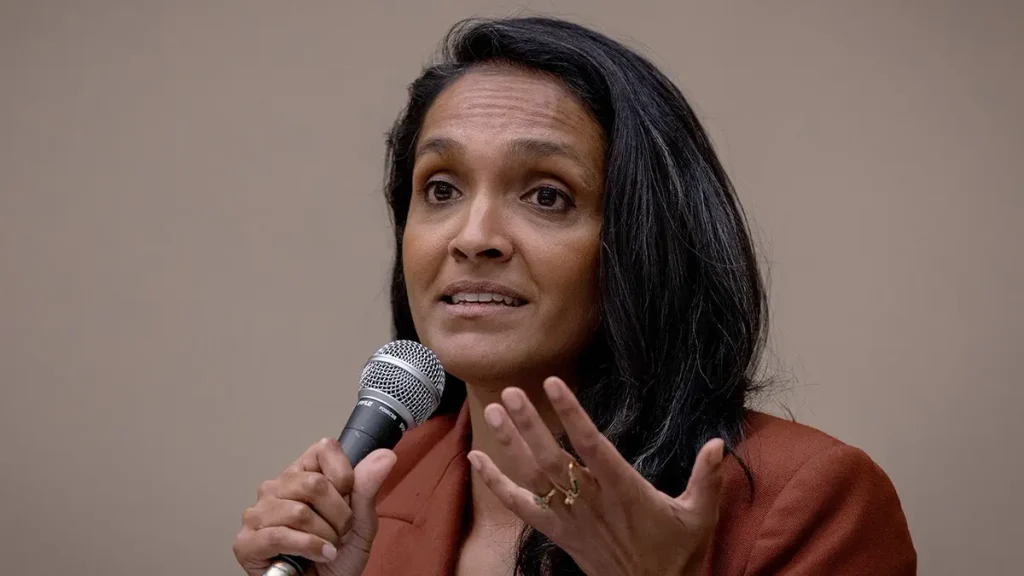
In an October 2026 CNN interview, Raman described herself as both a capitalist and a democratic socialist. She explained that she wanted capitalism to function without exploiting workers and economically vulnerable people. She also rejected positions associated with some elements of the socialist movement, including abolishing the police and prisons. That tells us something important.
Raman’s political philosophy appears to emphasize a government that actively addresses economic hardship while continuing to operate within a market-based economy. She is not proposing that Los Angeles seize private businesses or abolish private property. Her priorities are housing, homelessness, effective city services, worker protections and government accountability.
Some traditional socialists might argue that such an approach does not go far enough. Others see it as a practical expression of democratic socialism within American municipal government. Either way, we should judge her politics by her actual proposals and governing record, not merely by the label.
And What About Mayor Zohran Mamdani?
New York Mayor Zohran Mamdani is more openly associated with the broader democratic socialist movement. His rise to political prominence reflects growing frustration over the cost of living in one of the world’s wealthiest cities. Consider the policies at the center of his campaign.Free public buses. Universal childcare. Stronger tenant protections. A rent freeze for rent-stabilized apartments. Higher minimum wages. City-owned grocery stores intended to provide affordable food. These proposals challenge the idea that the private marketplace should be the sole mechanism for meeting essential human needs. But they also raise legitimate questions.
Who pays for these programs? Can municipal governments administer them efficiently? Will public competition actually lower consumer prices? Could aggressive regulation discourage private investment or reduce housing construction? These are reasonable questions.
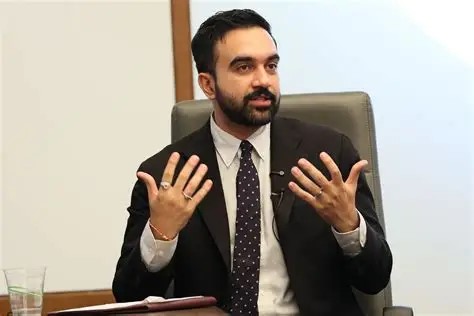
Mamdani’s politics is not simply that he wants government to spend more money. Rather it is his belief that economic power is concentrated too heavily among private owners and that public institutions should play a larger role in determining how essential services are delivered. That is a recognizable expression of democratic socialist thinking. Whether his policies achieve their intended results will depend on implementation, financing, public accountability and measurable outcomes.
Socialism, Communism and the American Fear of Government Control
For many Americans, particularly those of us who grew up during the Cold War, the word socialism carries considerable historical baggage. We remember the Soviet Union. We remember the political rhetoric surrounding Cuba. We remember the ideological struggle between communism and capitalism. We were taught that capitalism represented freedom and communism represented oppression.
Certainly, authoritarian communist governments have produced profound restrictions on political freedom, including censorship, imprisonment of political opponents and extensive state surveillance. And certainly we could say authoritarian democratic governments have profound restrictions on political freedom including censorship, cultural erasure in institutions and even indictments and imprisonment of political opponents and extensive state surveillance.
Those historical realities should never be minimized. But we shouldn’t confuse authoritarian communism with every political movement that advocates economic redistribution or public ownership.
A democratic socialist can support competitive elections, freedom of speech, independent journalism, private enterprise in many sectors and constitutional protections. And as we are well aware, an authoritarian government can emerge within a predominantly capitalist economy.
The real test of democracy is not simply whether an economy is capitalist or socialist. It is whether citizens can freely organize, criticize their government, participate in elections, exercise their constitutional rights and hold powerful institutions accountable.
A government that silences dissent is dangerous regardless of the economic philosophy it claims to represent. A government that uses police power to intimidate communities deserves scrutiny regardless of which political party controls it. And a government that exercises excessive control over the press threatens the very foundation of democratic society. This is particularly important to those of us who believe deeply in independent media and freedom of cultural expression.
Public support for journalism and the arts is one thing. Government control over what journalists report, what artists create or which political ideas may be expressed is something entirely different. Democratic socialism does not inherently require nationalizing the media or establishing a police state. But any expansion of public power must be accompanied by meaningful democratic safeguards.
Now, Let’s Talk About Long Beach
Is Long Beach a socialist city?
Spend enough time observing Long Beach City Hall, attending council meetings, participating in public policy discussions or working within the city’s extensive nonprofit community, and the question becomes understandable.
Consider the issues that consistently dominate our civic conversation. Affordable housing. Homelessness. Tenant protections. Healthcare access. Food insecurity. Economic equity. Workers’ rights. Environmental justice. Public transportation. Cultural inclusion. Public funding for the arts. These are among the very issues championed by democratic socialists across the country.
Long Beach also has an extensive nonprofit sector involved in addressing many of these concerns.
Organizations advocate for public resources, deliver community services, organize residents, promote equity and work with government agencies to implement programs. The city, in turn, distributes public resources, administers grants, funds services and works with nonprofit organizations to address social and economic challenges. One could reasonably observe that Long Beach embraces many of the social-policy objectives associated with democratic socialism.
But does that make Long Beach socialist? Not necessarily.
Long Beach remains firmly rooted in a capitalist economic system. Private businesses operate throughout the city. Real estate is overwhelmingly governed by private ownership and market transactions. Commercial development depends substantially on private investment.
The Port of Long Beach, one of the region’s most significant publicly owned economic assets, operates within a vast global system of private shipping, logistics and international commerce. The city’s economic development strategies encourage entrepreneurship, business growth, investment and job creation. In other words, Long Beach operates a mixed economy: private enterprise alongside publicly owned infrastructure, government services and social programs.
That is not the same as democratic socialism. Yet the comparison opens the door to a more important conversation.
The Nonprofit Economy: Community Empowerment or Institutional Dependency?
Long Beach has developed a substantial ecosystem of nonprofit organizations that influence civic policy and deliver services. Many do important and necessary work. They feed people, support families, provide healthcare-related services, advocate for tenants, promote education, support the arts and help residents navigate difficult economic circumstances. These contributions deserve recognition. But I believe we should also examine the structure of this nonprofit economy.
When nonprofit organizations depend heavily on government grants and public contracts, what happens to their independence? When the same individuals occupy leadership positions across multiple boards, commissions and community organizations, does that broaden civic participation or concentrate influence among a relatively small network of institutional leaders?
When nonprofit organizations advocate for economic equity, are they also creating pathways toward actual economic ownership? Are we developing more independent businesses? More property owners? More worker-owned enterprises? More community-controlled cultural institutions? Or are we building an increasingly elaborate system that manages economic hardship without fundamentally changing the conditions that produce it? These are questions, not accusations.
Because a nonprofit organization is not automatically democratic simply because it is nonprofit. Its leadership structure, funding sources, accountability practices and relationship to the community matter. Likewise, a government-funded program is not automatically empowering simply because its stated purpose is social justice.
So, Is Long Beach a Socialist City?
Based on its economic structure and public policies, I would describe Long Beach as a progressive-leaning municipality operating within a predominantly capitalist economy, with significant public-service and nonprofit partnerships. That description is more precise than simply calling it socialist.
But Long Beach certainly participates in many of the same policy debates that animate the democratic socialist movement nationally. And perhaps that is where we should begin. Not with fear of the word socialism. Not with automatic acceptance of every policy advanced in its name. But with a clear understanding of what is being proposed, who benefits, who pays, who makes decisions and whether ordinary people gain greater power over their lives.
The elections have brought democratic socialism into sharper focus.
Mamdani’s election in New York and Raman’s political breakthrough in Los Angeles demand that we pay attention.
But the more consequential conversation may be taking place right here in our own neighborhoods. How do we build communities that are economically strong, culturally vibrant, politically independent and genuinely democratic?
How do we move beyond managing poverty toward creating lasting prosperity? Alleviate poverty as a tangible expression of our Divine Right as expressed in that eternal mantra In GOD We Trust?. How do we ensure that public resources strengthen independent institutions rather than simply perpetuate dependency?
And how do we preserve the freedoms necessary to question the very institutions that claim to represent us?
Perhaps the greatest lesson of democratic socialism is not that government should control everything.
Perhaps it is that democracy should mean something more than casting a ballot every few years.
It should also mean having a meaningful voice in the economic and cultural life of our communities.
And whether we call ourselves capitalists, social democrats, democratic socialists or something else entirely, the fundamental question remains: Who holds the power, and how do we ensure that power serves the people?
Greg Johnson is a cultural producer, media professional and publisher of Beach City Perspective. His work explores the intersection of arts, culture, community development and civic life.